

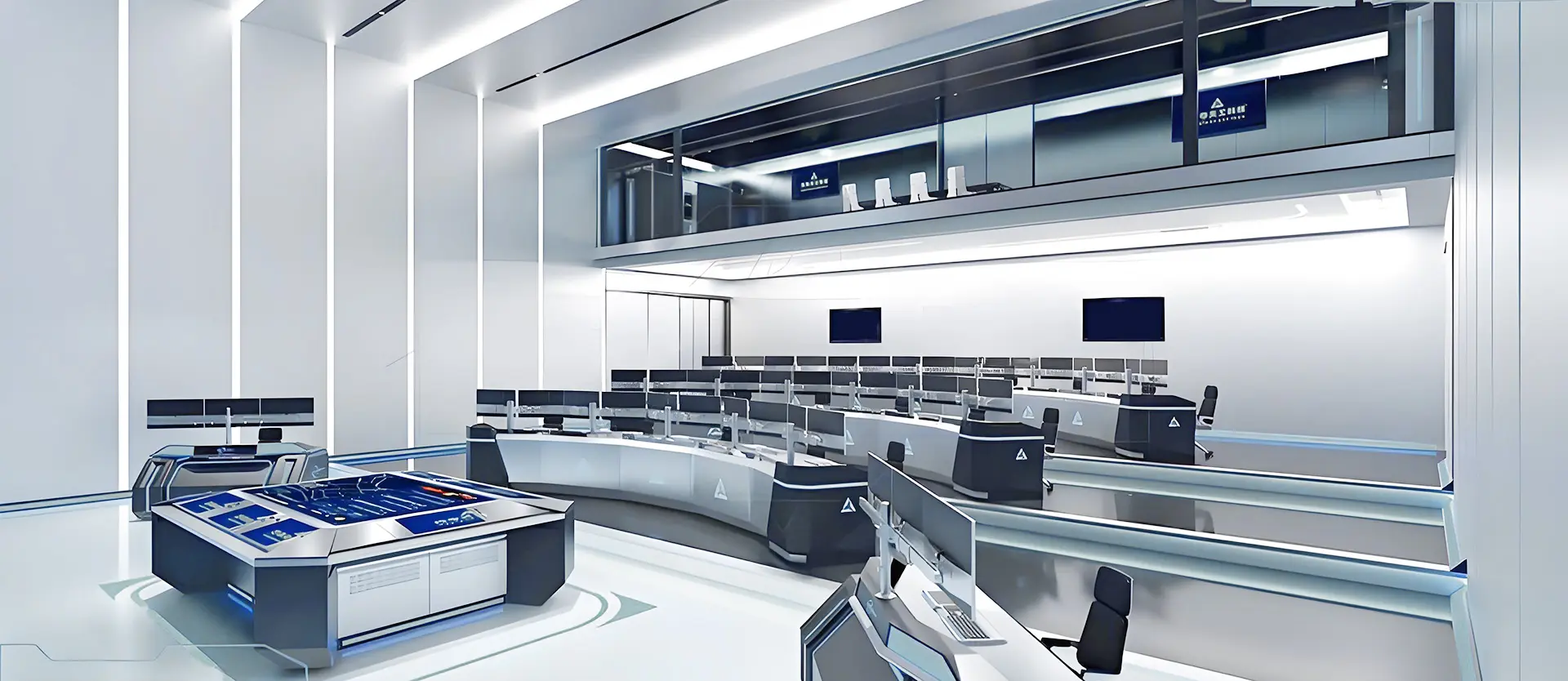
The military electronic sand table is a modern information-system platform for acquiring a three-dimensional picture of the battlespace, enabling efficient command, and supporting systematic, data-driven command training. Its core capability is the fusion of geographic information technology, military simulation, and advanced visualization to replace conventional maps and physical models. By integrating geospatial and situational data into a unified presentation, the system gives commanders a deep, intuitive understanding of the operational environment and—when coupled with command support workflows—substantially improves decision support, response timeliness, and the quality of command training.

The software platform of a military interactive electronic sand table is the system’s heart. It ingests multi-source external data, fuses, processes and stores that data, analyzes it according to operational requirements, and dynamically presents it in 2D and 3D. Thus, the data-processing platform is foundational; the data-ingestion platform and the visualization/display platform provide the supporting functions. Visualization endpoints—the most direct cognitive representation of the sand table—include mobile clients, desktop clients, and large-screen displays. Large displays typically support infrared multi-point touch and serve as the principal human-machine interaction surface.
1. System Overview — Interactive Military Electronic Sand Table
In military deployments, interactive electronic sand table systems are typically fielded in fixed command centers or mobile command posts and form a core component of command and training systems. Their basic capabilities center on 2D/3D geospatial presentation and battlefield simulation.

To tightly fuse the virtual sand table with the real operational environment, multi-AI, multi-channel interactive approaches are adopted to provide commanders with more efficient and natural interaction modalities. The goal is a full-element, multi-type, multi-level, multi-granularity 3D holographic presentation—enabling commanders to observe the battlespace from multiple perspectives and angles, grasp the big picture, and make timely, mission-critical decisions that increase operational effectiveness. The command annotation electronic sand table leverages natural interaction modes (voice, motion, gesture, gaze), augmented reality, and collaborative annotation to enable mixed-reality collaboration, common operating picture editing, and plan formulation directly inside real command posts—this capability will drive the next leap in electronic sand table evolution.
Lumilink’s multi-dimensional interactive command & annotation military electronic sand table is engineered from an operational standpoint. While preserving the terrain depiction capabilities of traditional physical sand tables and the geospatial display functions of classic electronic sand tables, the Lumilink design is focused on senior-leader operational and training requirements. It prioritizes interconnectivity between the sand table and other operator stations in the command center and implements a smart interactive training and command platform usable in wartime for operational command and in peacetime for exercises and rehearsals.
In wartime, the sand table operates as a chief-executive command display—fusing element-level support information from operator stations, ingesting real-time battlefield data, rendering 2D/3D situation displays, and providing annotation, measurement, and calculation tools. Coupled with data mining and AI, it can surface adaptive campaign options and run rehearsals to assist commanders in reaching timely decisions. In peacetime, the same sand table serves as the primary exercise control and evaluation terminal—supporting scenario creation, exercise orchestration, data recording across the exercise lifecycle, assisted assessment, playback, and historical analysis. It also functions as a research and training hub for staff exchanges and as an information-sharing and presentation platform for unit intelligence.
Technically, Lumilink’s platform is an integrated 2D/3D interactive military simulation and modeling environment built on a 2D GIS foundation and a 3D digital-earth engine. It combines multimedia display & control, simulation visualization, network communications, large-scale data management, and multi-point touch technologies into a unified system.
2.Interactive Military Electronic Sand Table System Architecture — Principles of Operation
The software layer is the system core. It ingests multi-source external data, fuses, processes and stores datasets, analyzes information against operational requirements, and dynamically renders 2D/3D visualizations. Consequently, the data-processing backbone is fundamental, while the data-ingestion and visualization platforms are the principal enablers. Visualization endpoints—mobile, desktop and large screens—are the most immediate cognitive interface; large screens with infrared multi-point touch are the main human-machine interaction modality.
(A) Infrastructure Layer
The infrastructure layer provides the runtime environment: graphics workstations, storage arrays, compute resources, network switches, display devices, and operating systems. It supplies a unified, high-speed, secure platform for prototype and production operation.
(B) Core Services Layer
This layer hosts data resources and basic services that support the application layer. It provides DBMS, communication managers, purpose-built engines and other foundation services. Core services can be tailored to mission needs and include geospatial services, data ingestion services, situational display, simulation/rehearsal engines, interoperability services, and military symbology/annotation services.
(C) Platform Application Layer
Comprises the business platform and user-facing application plugins—principally the data-ingestion platform, the data-processing engine, and the visualization/display platform.
(D) Data Ingestion Platform
Responsible for ingesting, processing, storing, and distributing diverse information types to build bespoke operational intelligence databases. It accepts data across formats and sources—operational processes, sustainment feeds, geospatial data, and simulation outputs—and integrates them logically and physically to support situational display, staff work, decision support, and training assessment. In peacetime it accumulates baseline force data (equipment, personnel, positions, targets, plans); in wartime it ingests real-time environmental, EM, geographic, human-terrain, platform location, BeiDou/GNSS, and video feeds and normalizes them for the data-processing platform.
(E) Data Processing Platform
Using geospatial data as its core, the processing platform constructs a single integrated operational picture: friendly & enemy dispositions, environmental context, target analysis, activity timelines, annotation and intervention visualizations. It exposes standardized interfaces for integration with external systems, supports plugin-based application extensions, and underpins planning workflows. In peacetime, accumulated data is used to model simulated battlespaces, develop plans, execute exercises, and store results in the ingestion platform for wartime recall.
(F) Visualization Display Platform
A native 3D simulation engine renders a battlespace consistent with the operational theatre and training area. Layered data fusion and editable logical data models enable layered information display and export. The platform supports infrared multi-point touch, voice control, and other interactive controls.
(G) Platform Plugins
Function-specific plugins address planning needs: data ingestion/management, process analysis/presentation, and plan rehearsal/assessment modules. They enable integrated “single-map” battlefield displays and orchestrate comprehensive simulation runs—covering reconnaissance, maneuver, defense, and fire-support options.\
3. Interactive Military Electronic Sand Table System Components
(A) Data Engine
Data Diversity — Supports massive multi-source data: imagery, vectors, DEMs, 3D models, nautical charts, land/air charts, etc.
Data update — Supports rapid updates at mixed precision levels.
Data Distribution — Client/Server (C/S) distribution for rapid sand table construction.
Data Access — Distributed deployment and cloud access for large datasets.
(B) Integrated Display & Control
Full-space Representation — Supports full-space, multi-view, multi-granularity simulation visualization.
2D/3D Unification — Native 2D/3D integrated visualization.
Multi-Point Touch — New HMI enabled by multi-touch technologies.
Interactive Annotation — Support for annotations on 3D models, landmarks, routes, zones and 360° panoramas, with multimedia attachments.
(C) Situational Display (Sand Table Picture)
Situation Visualization — Multi-target, multi-wave visualization with save/playback.
Diverse Data Sources — Compatible with GPS, BeiDou, radar, AIS and extensible interfaces.
Editing & Rehearsal — 2D/3D unified editing and rehearsal capabilities.
Effects Library — Rich simulation effects: flame, explosion, smoke, infrared, EM, radar signatures.
(D) Military Symbology & Annotation
Collaborative Marking — Support for synchronous and asynchronous multi-client collaborative military marking.
2D/3D Marking — Simultaneous 2D/3D military symbol editing.
Sketch Recognition — Intelligent recognition of sketch annotations.
Same-Screen Marking — Multi-user same-screen 3D model annotation and editing.
Symbology Rehearsal — 2D/3D symbology rehearsal and scenario play-out.
(E) Simulation Engine
Natural Environment Simulation — Game-grade rendering for volumetric clouds, fog, rain, snow, sea states, etc.
Meteorological Modeling — Efficient processing and numerical modeling of large-scale, multi-source battlefield weather data.
Rehearsal & Wargaming — Human-in-the-loop deployment and rehearsal with extensible algorithms and rule sets.
Effectiveness Assessment — Supports quantitative assessment of operational effectiveness.
(F) Collaborative Workspaces
Electronic Whiteboard — Distributed collaborative annotation supporting standard graphics, military symbols and multimedia.
Video Conferencing — Text/voice/video collaboration modes to enhance communication efficiency.
File Sharing — Support for TXT, PPT, PDF, images, archives and video content.
(G) Software-Hardware Integration
Seamless integration with desktop interactive hardware, multi-touch surfaces, video-conferencing hardware, and cross-platform applications.
(H) Key Performance Indicators
Supports surveillance system visualization, fault simulation, data integration; global air/sea region mapping and air-defense recognition areas; rapid conversion of operational data into learning resources via knowledge templates; preconfigured rehearsal scenarios for multiple countries (e.g., U.S., India, Japan); and scalable storage/processing for multi-source datasets.
4. Interactive Military Electronic Sand Table System Strengths & Differentiators
Comprehensive Industry Solution
The interactive military electronic sand table spans data processing, import/update, information sharing, collaborative workflows, command decision support, military marking, simulation, and rehearsal. Its modular design permits customization to meet diverse user requirements.
Massive-Scale Data Management
Geospatial data is the system’s core. The data engine stores, processes and updates multi-source, large-scale geospatial data with distributed deployment and cloud access—providing a cost-effective, efficient foundation for sand table construction.
Integrated Applications
The system tightly couples software and hardware—supporting multi-point touch screens, command consoles, circular projection domes, dedicated control stations and monitoring platforms. It delivers integrated 2D/3D applications and consolidates video conferencing, network comms, and military annotation into a multifunctional sand table suite.
Openness & Interoperability
The architecture is modular and developer-friendly with well-designed APIs, strong hardware compatibility, and support for secondary development and rapid integration with third-party software systems.
As information architectures deepen and data sources proliferate, building a fully capable electronic sand table system—one that delivers command decision-analysis, task rehearsal, and holistic situational display—has become an operational imperative. Lumilink’s development addresses these operational-level needs by delivering an interactive military sand table solution with clear situational presentation, diverse interaction modalities, flexible data integration, comprehensive functionality, and extensibility to support senior commanders’ operational command and training requirements.
